

Community building begins with people. It grows through relationships, shared purpose, and a genuine concern for the well-being of one another.
For Bahá’ís, building community is not simply a program or a set of activities. It is a way of life, a habit of caring for our neighbours and contributing to the well-being of the places we call home.
Across the District of North Vancouver, small groups of people, Bahá’ís, friends, and neighbours, are coming together to build stronger, more connected communities. Through a handful of simple, welcoming activities, people of all ages and backgrounds have opportunities to learn, serve, connect, and contribute. Everyone is welcome to take part.
The aim is not simply to bring people together, but to learn how a community can work collectively toward the well-being and progress of everyone who lives in it.
One way Bahá’ís understand community is as more than simply a group of people living in the same place. It is a community where individuals, families, and institutions learn to work together, with a shared concern for the well-being and progress of everyone.
As described in the writings of the Bahá’í Faith:
“A community is a comprehensive unit of civilization composed of individuals, families and institutions … working together with a common purpose for the welfare of people both within and beyond its own borders.”
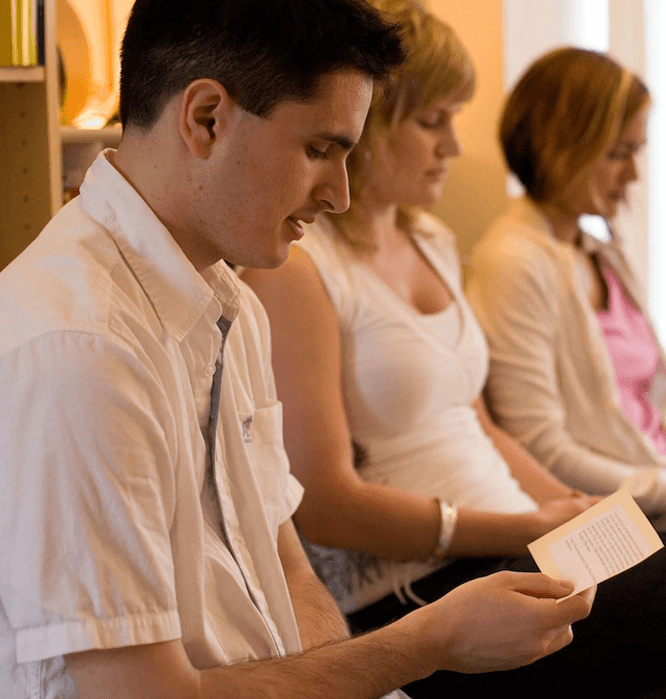
On a weeknight in someone’s home, neighbours gather to read prayers aloud, share music and often a meal, and sit together in a moment of quiet. There is no ritual and no one in charge. Just a shared wish to nourish the spirit and to know one another a little better. These gatherings happen in homes across the North Shore, and some are even held in various languages.
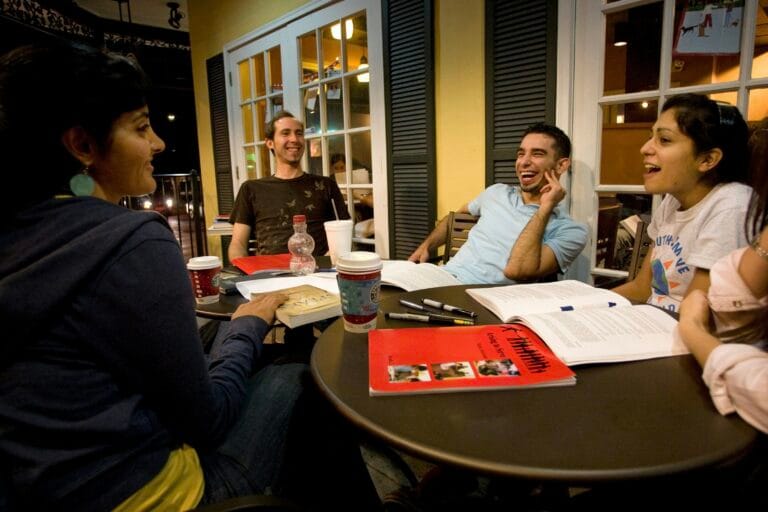
Friends meet regularly to explore the deeper questions of life and service, working through a series of readings at their own pace. Study groups are informal or semi-formal gatherings, often formed among families, friends, neighbours, co-workers, or other social groups, with a shared aim of learning, reflection, and action.
Rather than being lecture-based, the process centres on conversation, reflection, and putting ideas into practice. Participants journey through a series of booklets that explore different aspects of individual and collective life, including how to serve one’s family, community, and society.
The first booklet, Reflections on the Life of the Spirit, explores three important spiritual themes: understanding the Baháʼí Writings, prayer, and life after death. Along the way, participants encounter mystical, beautiful, and powerful passages from the Baháʼí Writings and consider how they can speak to everyday life, like this one:
“Know thou that the soul of man is exalted above, and is independent of all infirmities of body or mind. That a sick person showeth signs of weakness is due to the hindrances that interpose themselves between his soul and his body, for the soul itself remaineth unaffected by any bodily ailments. Consider the light of the lamp. Though an external object may interfere with its radiance, the light itself continueth to shine with undiminished power. In like manner, every malady afflicting the body of man is an impediment that preventeth the soul from manifesting its inherent might and power. When it leaveth the body, however, it will evince such ascendancy, and reveal such influence as no force on earth can equal. Every pure, every refined and sanctified soul will be endowed with tremendous power, and shall rejoice with exceeding gladness. – Baha’u’llah, Gleanings from the Writings of Baha’u’llah, pp. 153-154.”
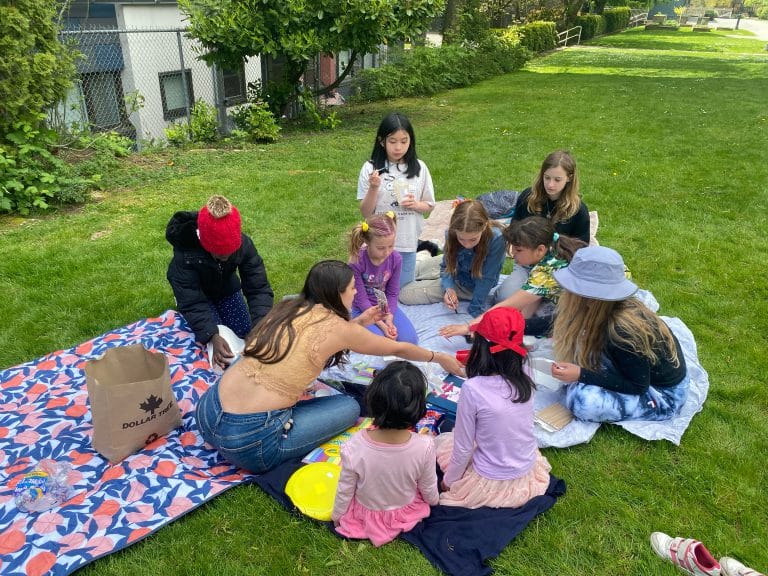
The family is the nucleus of human society and a vital setting for developing praiseworthy qualities and capacities. As family members nurture bonds of love and learn to live together harmoniously, they discover that their own well-being is closely connected to the progress and well-being of others.
In these classes, children explore qualities such as honesty, kindness, and generosity, and practice them through stories, songs, and games. Parents of all backgrounds are warmly welcome and often lend a hand in creating a joyful, nurturing environment.
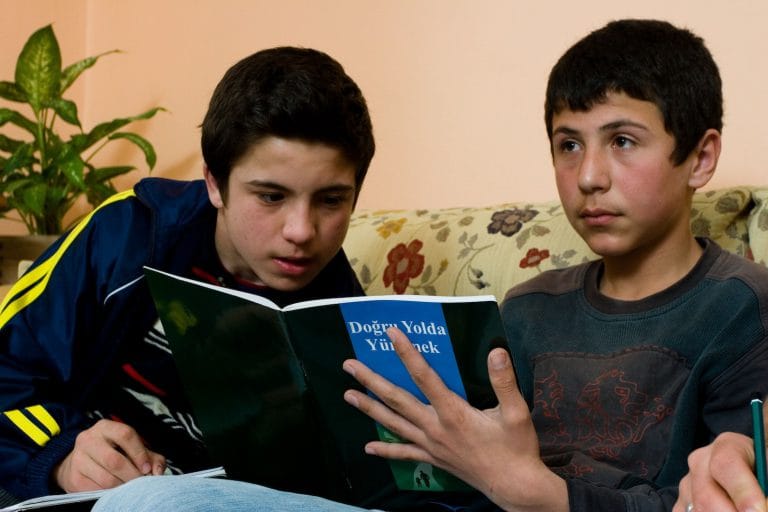
Young people aged 12 to 15 are at a unique stage of life, transitioning from childhood to youth and experiencing rapid physical, intellectual, emotional, and spiritual growth. As they develop a deeper awareness of themselves and the world around them, they begin to explore profound questions and discover their own talents and abilities. This can also be a time of uncertainty and change.
The Junior Youth Empowerment Program helps young people channel their growing capacities into friendship, reflection, and service. Groups combine study, healthy recreation, the arts, and community service. A sequence of books strengthens language and powers of expression while encouraging thoughtful discussion about the individual and society. Service projects might include neighbourhood cleanups or inviting passersby to share what they value about their community. Through these experiences, young people learn to work together, express their ideas, and contribute to the well-being of others.
This spirit of solidarity has continued to spread over the decades, and today its effect is apparent in a range of developments, from the rejection of deeply ingrained racial prejudices to the dawning consciousness of world citizenship, from heightened environmental awareness to collaborative efforts in the promotion of public health, from the concern for human rights to the systematic pursuit of universal education, from the establishment of interfaith activities to the efflorescence of hundreds of thousands of local, national and international organizations engaged in some form of social action.
Faith is meant to make a practical difference. Social action can take many forms, from simple efforts among friends and neighbours to more sustained programmes that address social and economic needs. Whatever the scale, the aim is to apply the teachings and principles of the Faith to contribute to both the material and spiritual well-being of a community.
At the heart of this is a conviction that material progress and a strong inner life go hand in hand. One example is English Corner, a series of free conversation classes we have offered in North Vancouver since 2019 in partnership with local libraries and community centres in Capilano, Lynn Valley, Parkgate, and Lions Gate. People from many countries and backgrounds come to practise English, while building friendships, confidence, and trust.
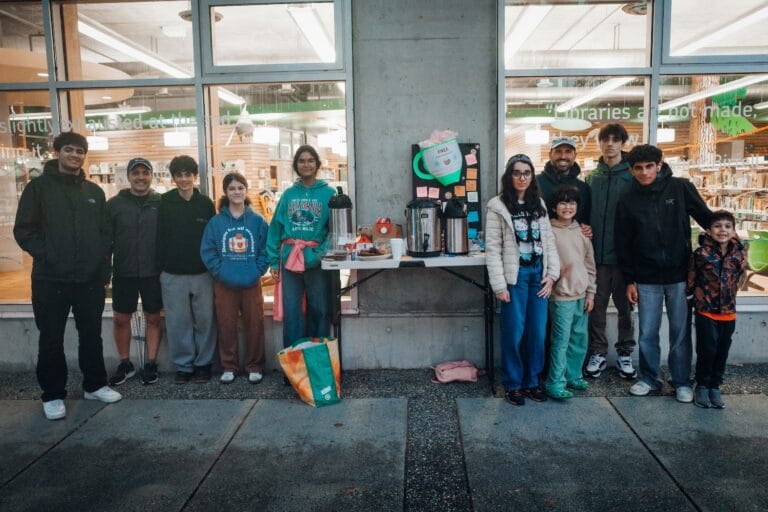
Other efforts are smaller but no less meaningful: young people organizing neighbourhood cleanups, gathering food and toiletries for the North Shore Women’s Centre, and creating welcoming spaces where newcomers feel at home. As our confidence and capacity grow, so do our efforts to contribute to the well-being of our communities.
All of this happens in homes, parks, libraries, and community rooms across the North Shore. If you would like to visit a gathering or learn more, we would be glad to point you to one near you.
Interested?
From communities across Canada to neighbourhoods in nearly every country on earth, Bahá’ís work alongside friends of all backgrounds to build a world shaped by the oneness of humanity.
Learn more about the Bahá’í Community of Canada and the worldwide Bahá’í Faith.